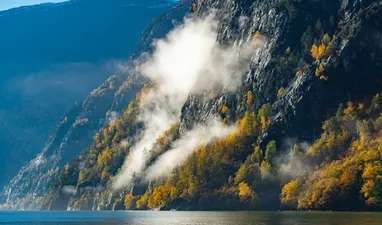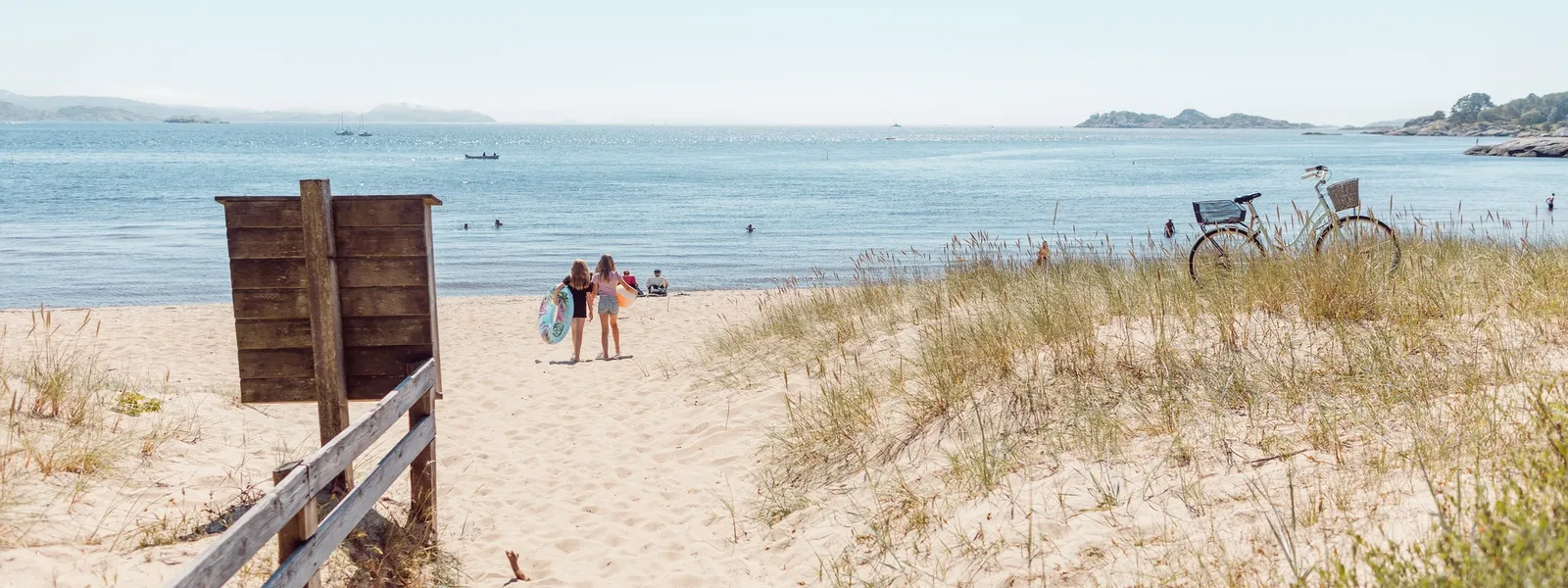
From the moment you arrive in Kristiansand, the round trip through Southern Norway’s coastal landscape begins. This is a journey rich in contrasts, combining small coastal communities, open stretches along the sea, dramatic rock formations and peaceful landscapes that invite you to slow down and take your time. Following the coast, the drive connects the experiences and makes the journey itself an essential part of the holiday.
Southern Norway’s unique coastal landscape
From Kristiansand in the east to Stavanger in the west, you can look forward to driving through a truly distinctive cultural landscape. Southern Norway’s coastline is characterised by a striking yet rugged environment of rocky islets, crashing waves, sandy beaches and protected wetlands.
In the area around Egersund lies the Magma Geopark, a UNESCO-protected landscape that is unique worldwide. The bedrock consists of anorthosite – the same type of rock found on the lighter areas of the Moon. A visit here is therefore often described as a journey through a genuine lunar landscape.
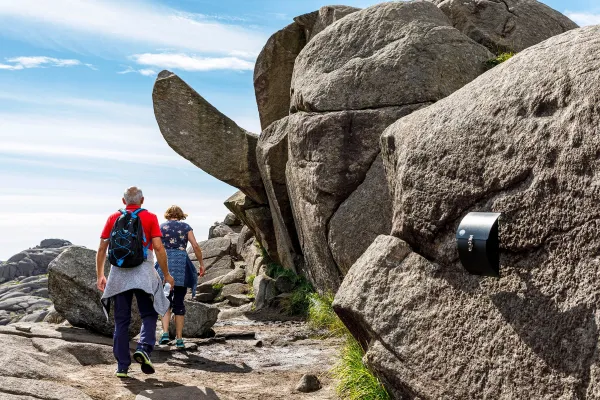
Foto: Arne Ove Østebrøt
Closer to Stavanger, the Jæren region offers a true beach paradise and is home to Norway’s longest sandy beach. At the same time, the area is known for its wide, flat agricultural landscapes, providing excellent opportunities to sample local produce and specialities. Charming coastal towns and impressive lighthouses
Travelling along the coast of Southern Norway is also a journey through the country’s history – from the Stone Age to the present day. Particularly distinctive are the small coastal towns such as Mandal, Flekkefjord and Egersund, where historic wooden houses bear witness to their origins in the 19th century. Here, history, culture and a relaxed coastal atmosphere come together naturally.
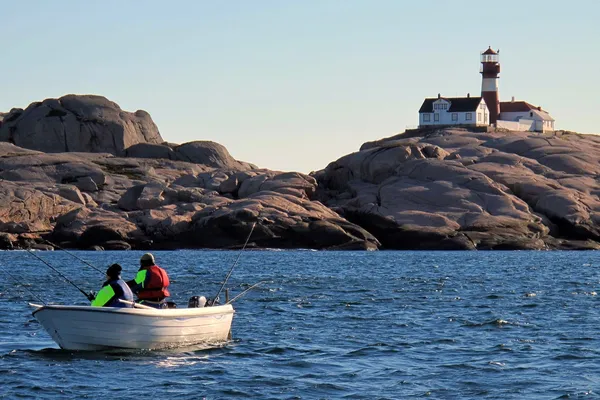
Foto: Inger Hutchinson / Visit Sørlandet
Along the way, there are many opportunities to visit historic lighthouses, offering sweeping views of the sea as well as insights into the often dramatic history of maritime life along the coast. Lista Lighthouse is the site in Norway where the greatest variety of bird species has been recorded, thanks to the surrounding protected wetlands. Eigerøy Lighthouse, meanwhile, is Norway’s first cast-iron lighthouse and still stands much as it did when it was built in the 1850s.
Egersund – historic wooden houses in every colour
During the journey, you will enjoy two overnight stays at the welcoming, historic Grand Hotell Egersund. Comprising ten historic buildings in the heart of the town, the hotel reflects Egersund’s distinctive charm, with impressive architecture, rich cultural history and the warm hospitality of the coastal region.
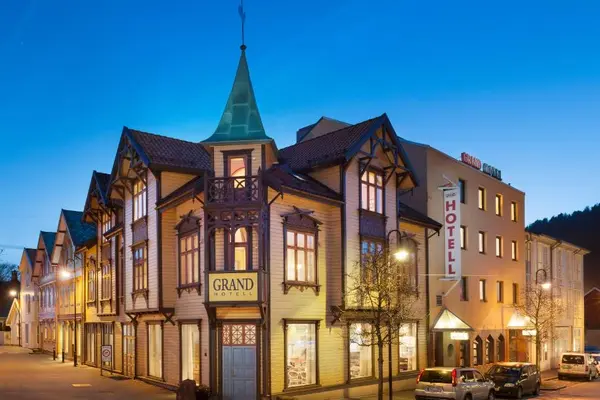
Foto: Grand Hotell Egersund
Just outside the door lies Egersund’s historic quarter, where colourful wooden houses create a charming setting for independent shops, cafés, culture and arts and crafts. It is easy to spend a full day exploring both the town and the harbour area. Highlights include the local cultural trail and the viewpoint on Varberg Hill, where you can also see Bronze Age rock carvings. For those interested in more recent industrial history, the Egersund Fayance Museum offers fascinating insights into the local porcelain factory, which was once the largest in Norway. An enjoyable return crossing to Denmark
When it is time to board the ferry back to Hirtshals, you can look forward to another relaxed crossing. Enjoy the selection of cafés and restaurants on board, take a walk on deck – perhaps while watching a spectacular sunset – and end your holiday with a drink and live music in the Seaview Bar & Nightclub.
When it is time to rest, a comfortable night’s sleep awaits in your cabin, before the journey concludes the following morning with arrival back in Denmark.